Bone Grafting
Rebuild jawbone volume lost to extraction, trauma, or periodontal disease to create a strong foundation for dental implants.
Bone Grafting in Richmond, VA
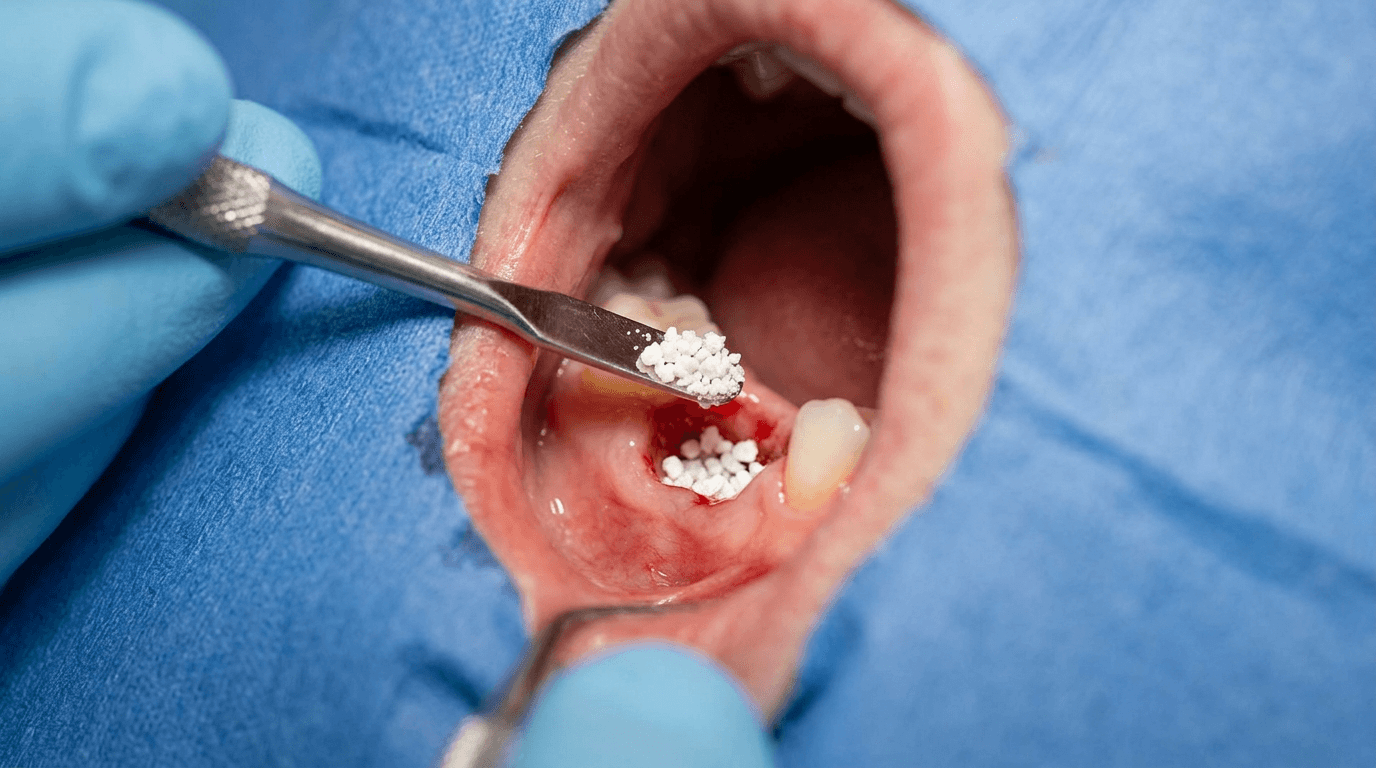
Bone grafting at Grove Periodontists rebuilds jawbone volume lost to tooth extraction, periodontal disease, or trauma. Our board-certified periodontists in Richmond, VA use cutting-edge biomaterials and regenerative techniques including guided bone regeneration to restore the foundation needed for successful dental implant placement. We serve patients throughout the greater Richmond and Midlothian area with predictable bone augmentation procedures.

Medically reviewed by Dr. Kara Dunegan Gilliam, DDS, MS, Diplomate of the American Board of Periodontology
Why Is Bone Grafting Necessary?
After tooth loss, the jawbone in the empty space begins to deteriorate because it no longer receives stimulation from the tooth root. This process, called resorption, can reduce bone volume by up to 25% in the first year alone. Insufficient bone density makes dental implant placement difficult or impossible without first rebuilding the ridge. Bone grafting restores lost volume, creates a solid foundation for implants, and preserves facial structure. Grafting is also commonly performed immediately after tooth extraction (socket preservation) to prevent the significant bone loss that would otherwise occur.
Types of Bone Grafting Procedures
We offer several bone grafting approaches tailored to your specific needs. Socket preservation grafts are placed immediately after tooth extraction to maintain bone volume. Ridge augmentation rebuilds the width or height of the jawbone ridge when significant bone loss has already occurred. Sinus lift procedures (sinus augmentation) add bone to the upper jaw in the premolar and molar area when the sinus floor is too close to the jawbone for implant placement. Block bone grafts use bone from another site to rebuild larger areas of deficiency. Our periodontists use advanced biomaterials including mineralized bone allografts, xenografts, and growth factors to promote predictable bone regeneration.
Recovery and Healing Timeline
Recovery from bone grafting is generally straightforward. Most patients experience mild to moderate swelling and discomfort for the first few days, manageable with prescribed medications and ice packs. You'll follow a soft-food diet and modified oral hygiene routine for the first week. The bone graft typically requires 4 to 6 months to fully integrate and mature before dental implants can be placed. We monitor your healing with follow-up imaging to confirm the graft is developing properly. For sinus lift procedures, additional precautions include avoiding nose blowing and flying for two weeks following surgery.
Benefits of Bone Grafting
- Restores jawbone volume for dental implant placement
- Preserves bone after tooth extraction
- Prevents facial structure collapse from bone loss
- Enables implant placement in previously insufficient areas
- Uses advanced biomaterials for predictable results
- Multiple techniques for different clinical situations
Frequently Asked Questions
Bone grafting is commonly needed when jawbone has been lost due to tooth extraction, gum disease, or injury. It creates a strong foundation for dental implants or helps preserve bone after an extraction. Without grafting, bone loss after extraction can be significant enough to prevent future implant placement.
Bone grafts typically require 4 to 6 months to fully integrate before an implant can be placed. We monitor your healing progress with follow-up imaging to ensure the graft is maturing properly. Some procedures may heal faster depending on the grafting material and technique used.
Most patients report that bone grafting is less uncomfortable than expected. We use local anesthesia and offer sedation options for comfort. Post-operative discomfort typically peaks 2 to 3 days after surgery and is well-managed with prescribed pain medication. Swelling usually resolves within a week.
Modern bone grafting primarily uses processed donor bone (allograft) or bovine-derived bone mineral (xenograft), which are thoroughly sterilized and tested for safety. These materials serve as a scaffold that your body gradually replaces with your own natural bone. In some cases, your own bone or synthetic bone substitutes may be used.
Related Services
Dental Implants
Replace missing teeth with permanent titanium implants that look, feel, and function like natural teeth. Our periodontists place and restore implants at both our Richmond and Midlothian offices.
Tooth Extractions
Gentle surgical extractions including wisdom teeth removal, with socket preservation and immediate implant placement options.
Ready to Learn More About Bone Grafting?
Schedule a consultation to discuss your treatment options with our board-certified periodontists.